
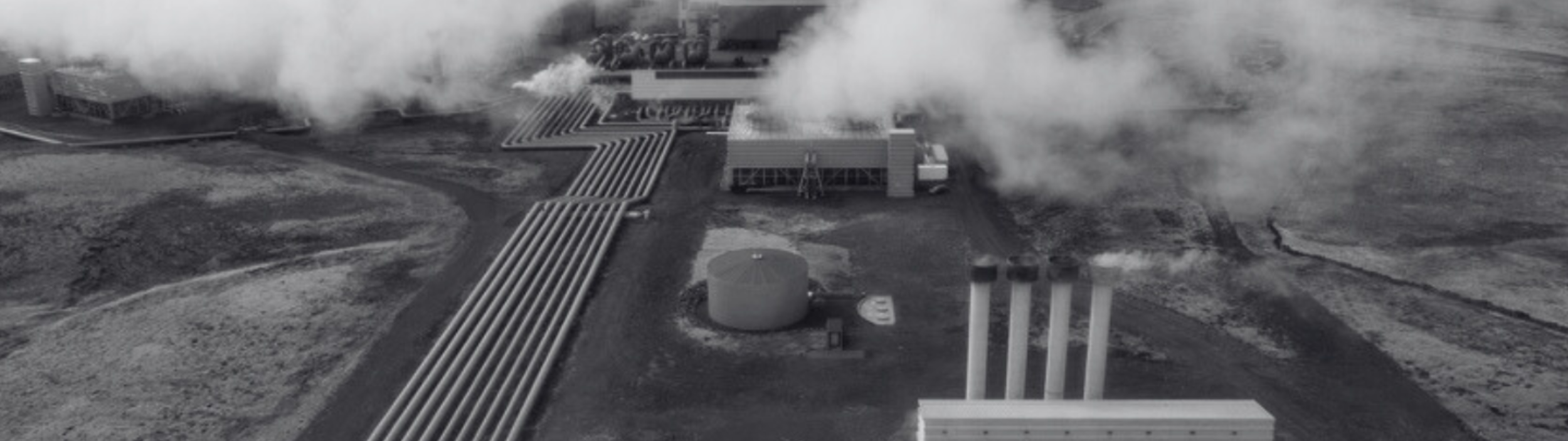
In comparison to other sources of power, geothermal energy presents numerous advantages, such as its resilience against drought and climatic variability in addition to its high availability capacity factor at over 95 %, and its green energy. Notably, replacing one megawatt hour of coal-fired power plant with one megawatt hour of geothermal power offsets approximately one ton of carbon dioxide emissions, thus protecting the environment and achieving sustainable development.
Despite these advantages, East Africa continues to sit on the largely untapped goldmine that is geothermal energy. The region’s Great Rift Valley, stretching from the Red Sea to Mozambique, holds an estimated 20,000 megawatts (MW) of geothermal potential. This is enough to power millions of homes and industries yet only a fraction has been developed. Kenya leads with about 950 MW of installed capacity, while Ethiopia follows with 7.3 MW.
With the increasing global pursuit of clean energy, Kenya, as a pioneer in green energy in Eastern Africa, is writing a new chapter in green development through geothermal development. Geothermal energy has been the leading contributor to the generation mix in Kenya, maintaining a range between 39.15% and 46.69% over recent years, including FY 2023/24 to FY 2024/25, compared to hydropower, which has been notably affected by the vagaries of weather, to 24.81% in 2023/24. Looking at the availability factor, the figures below demonstrate geothermal energy’s reliability relative to other renewables.
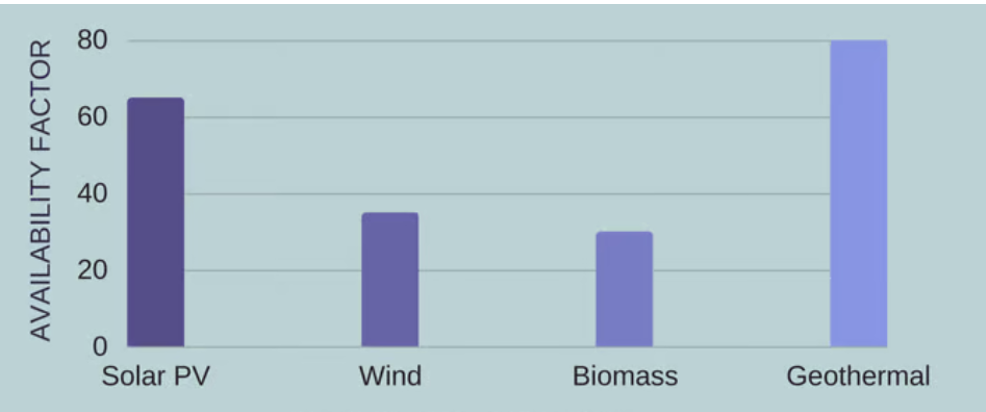
Figure 1: Reliability of Geothermal Energy Source in Comparison to Other Renewables. Source
On the other hand, the extraction of geothermal energy leads to a release of greenhouse gases like hydrogen sulfide, carbon dioxide, methane and ammonia. However, the amount of gas released is significantly lower than in the case of fossil fuels, with geothermal power plants emitting about 122 grams of CO2 per kilowatt-hour of electricity produced, while coal-fired plants emit over 900 grams. This makes geothermal energy a much cleaner and more climate-friendly option for electricity generation.
This article explores how Kenya has moved from early exploration to large-scale geothermal expansion, the financial and institutional mechanisms enabling that growth, and the role of international partnerships in shaping the sector’s future.
Geothermal History: From Exploration to Continental Firsts
Exploration of geothermal resources for large-scale power production started in 1952 with mainly geological investigations in the region between Olkaria and Lake Bogoria in the north rift, which had been identified as the most promising sites for geothermal development. The studies were championed by the then East African Power & Lighting Company Ltd (EAPL), supported by the United Nations Development Program (UNDP) and other international agencies. The first two exploration wells were drilled in 1956 to depths of 950 m and 1200 m, respectively, recording a measured downhole temperature of about 235°C. Unfortunately, the wells could not immediately discharge and consequently slowed down research on geothermal activities until the 1970s.
After the 1970s oil crisis, the focus shifted back to the development of renewable energy sources for world energy security. From 1971 to 1972, a joint geothermal exploration work between the Government of Kenya and the UNDP was further carried out in Olkaria, Lake Bogoria and Eburru geothermal prospects. The studies included geological mapping, hydrogeological surveys, geophysical studies and remote sensing surveys. The Olkaria area was found to be the most prospective, and the research then narrowed down to an area of about 80 km2, comprising the current Olkaria geothermal field, where the first large-scale geothermal power plant in Africa was installed in 1981.
Geothermal Potential and Geographic Advantage
Kenya is endowed with vast high-temperature geothermal resources estimated to be more than 10 GW, with all the high-potential sites being located within the Kenyan Rift Valley. This is due to young volcanism, which caused high heat flow and the elevated crustal heat flow associated with the formation of the Kenya rift. In addition, low- and medium-temperature geothermal resources are abundant within and outside the Kenyan Rift Valley, with prospective geothermal sites located in Quaternary volcanic centres, such as Silali, Lake Bogoria-Arus, Menengai, Eburru, Olkaria, Suswa, and Lake Magadi.
Translating this exceptional geological endowment into reliable electricity, however, requires strong institutions capable of absorbing exploration risk and coordinating large-scale development. Therefore, the Geothermal Development Company (GDC) was created to fast-track geothermal development by de-risking and partnering with power producers via Project Implementation and Steam Supply Agreements (PISSAs). In 2014, GDC launched it’s blue print development strategy. In the strategy, GDC put out projections of installing 12 rigs and drilling at least 1,200 wells by 2030. GDC has geothermal prospects in Olkaria, Menengai, Paka, Silali and Bogoria. From this development programme, GDC has developed 170 MW in steam capacity in Menengai, where a phased-based implementation of the programme is underway.
Financing the Subsurface: Scaling Geothermal Energy in a Capital-Constrained Context
Economic feasibility is a crucial factor in geothermal energy development, though it has been proven difficult to finance due to the requisite years of surveying, drilling, and testing before a resource can be proven financially viable. Banks are generally unwilling to provide financing for unproven resources, at least not at an attractive rate. Additionally, low feed-in tariffs for geothermal generation make investment even less attractive. These financing barriers have slowed geothermal development across East Africa, leaving much of the region’s vast potential stranded at the exploration stage and reinforcing reliance on climate-vulnerable or fossil-based power systems.
In Kenya, progress has therefore relied heavily on development finance institutions (DFIs) and blended financing models. A recent example is the African Development Bank’s approval of a USD 16.5 million loan to support the development of a 35 MW geothermal power plant by OrPower 22 at the Menengai field. Such interventions are critical in bridging financing gaps, de-risking projects, and sustaining momentum in Kenya’s geothermal expansion, underscoring the sector’s continued dependence on concessional finance to unlock private investment.
Case Study of OrPower 22
The new geothermal plant at Olkaria will be operated and managed by OrPower 22, a company long embedded in Kenya’s geothermal sector. However, OrPower 22 is now under the ownership of the Kaishan Group, a Chinese industrial and energy firm, bringing foreign control into a strategically important national resource. This raises a key question: why is a Chinese company operating Kenyan geothermal assets?
The answer lies largely in capacity. China brings deep pools of capital, enabling large-scale investments that local developers often struggle to raise. Kaishan also offers advanced geothermal drilling capabilities and turbine manufacturing expertise, built through decades of experience in high-risk subsurface projects. The OrPower partnership highlights how strategic foreign investment can help Kenya overcome the high capital and technical barriers of geothermal development. If matched with clear governance frameworks, local capacity building, and technology transfer, such collaborations can move beyond short-term project delivery to strengthen Kenya’s long-term energy autonomy and industrial capability.
What it Means for Kenya to Host the Global Geothermal Congress
On 9th December 2025, the International Geothermal Association (IGA) announced that Nairobi, Kenya, has been selected as the host city for the World Geothermal Congress 2029 (WGC2029). This marks the first time in history that the world’s flagship geothermal event will be held on the African continent. As one of the world’s leading geothermal nations and a recognised pioneer in large-scale geothermal power generation, Kenya offers a compelling setting for the Congress. Hosting the World Geothermal Congress at the United Nations Environment Programme headquarters in Nairobi is expected to bring more than 3,000 scientists, innovators, policymakers, financiers, and industry experts to the country, offering Kenya a rare opportunity to showcase its achievements, deepen international partnerships, and attract new investment into its expanding geothermal sector.
Kenya’s win therefore serves as a milestone for the region, demonstrating that African countries are ready to take a leading role in the transition toward clean, reliable and base load energy sources. The upcoming Congress is expected to strengthen regional cooperation, enhance technical expertise among African scientists and engineers and accelerate financing and technology transfer for geothermal projects across East Africa. By hosting WGC 2029, Kenya positions itself at the heart of global climate and energy discussions, offering a platform where Africa can amplify its voice, highlight its renewable energy ambitions and push for greater international support to unlock the continent’s vast geothermal resources.
Conclusion
Geothermal energy is a cornerstone of Kenya’s energy security, reliable, indigenous, and resilient amid climate uncertainty. Beyond powering homes and industries, it is a long-term asset for both climate mitigation and adaptation, anchoring the country’s transition to a low-carbon future. Kenya has proven that large-scale geothermal development is possible, even in a capital- and risk-intensive sector. The real challenge now is no longer whether geothermal can be developed, but how. The path forward must strengthen domestic technical capacity, safeguard strategic autonomy, and position Kenya not just as a regional leader, but as a confident global voice in clean energy innovation.
