
Forgotten Conditions: The Silent Burden of Neglected Tropical Diseases in East Africa
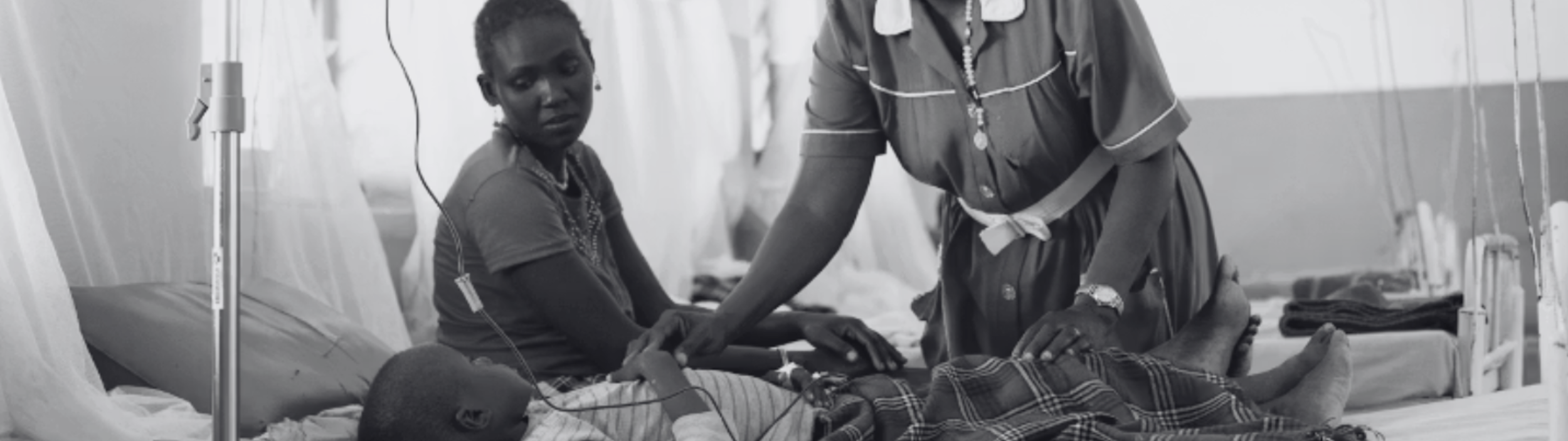
Although Neglected Tropical Diseases (NTDs) affect more than 1.5 billion people globally, they remain among the most persistently overlooked public health challenges. NTDs are a group of about 20 different infections and conditions, such as trachoma, rabies, leprosy, bilharzia, human African trypanosomiasis, snakebite envenoming and dengue fever, among others. While many are preventable and treatable, they continue to thrive where inequity does, clustering in communities facing poverty, limited access to safe water and sanitation, and overstretched health services. This contrast is cause for concern; When a disease is both controllable and persistent, it reflects not only scientific failure but systemic neglect. Despite mass drug administration efforts and targeted elimination programmes, nearly 1.5 billion people globally require interventions against NTDs, a burden which is particularly pronounced in East Africa.
NTDs Across East Africa
Countries in the region continue to report high numbers of people requiring interventions against NTDs, such as ongoing chemotherapy and surveillance. For example, the 2023 United Nations SDG country profiles reported that approximately 63 million people in Ethiopia, 36 million in Tanzania, and 21.7 million in Uganda required interventions against neglected tropical diseases. Kenya reported a lower but still substantial figure of 9.8 million people requiring such interventions.
Trachoma, which is currently the leading cause of blindness worldwide, faces a significant concentration of cases in East Africa, with nearly half of the global trachoma burden found in the region. Ethiopia and Somalia, in particular, are ranked among the three countries with the highest number of affected individuals, reporting over 500,000 and 100,000 cases, respectively. Dengue fever has historically been overlooked and underreported in Africa; however, recent reports document repeated regional outbreaks, particularly in the East African region in countries such as Kenya, Tanzania, Somalia, Eritrea, Sudan, and Ethiopia. In Kenya, the dengue virus has been detected directly in Aedes aegypti mosquito populations, indicating sustained local transmission rather than isolated imported cases.
The significance of NTDs lies not only in their epidemiological profiles but also in their long-term social and economic consequences. These diseases contribute to chronic illness, disability, visual impairment, and premature mortality, with global estimates attributing approximately 120,000 deaths each year to NTD-related causes. In East Africa, repeated exposure, delayed diagnosis, and limited access to care are common, particularly among populations reliant on informal water sources, agricultural labour, or informal urban settlements. As a result, disease burden is shaped as much by access to timely services and continuity of care as by biological exposure alone.
This reflects the persistence of transmission in settings marked by poverty, limited access to basic services, and uneven health systems. These structural conditions are exacerbated by political and financial imbalances, whereby communities experiencing the highest disease burden often have the least influence over national and regional policy priorities and resource allocation.
Climate change also further intensifies the NTD control challenge in East Africa. Shifts in rainfall patterns, increased flooding, prolonged droughts, and rising temperatures are altering ecological conditions that support NTD vectors and intermediate hosts, such as mosquitoes and snails, responsible for the transmission of diseases such as dengue fever and schistosomiasis. Warming temperatures and changing precipitation patterns across East Africa also expand conditions favourable to vectors such as the Aedes aegypti mosquito, responsible for dengue fever. These dynamics indicate that NTD control cannot be approached as a narrow disease-specific intervention. Instead, they must be understood as a regional health systems development challenge that requires an interdisciplinary response to sustained demand for treatment, monitoring, and health system capacity across health, environmental management, water and sanitation, and climate adaptation planning.
Current Efforts
Regional progress against NTDs has largely been driven by sustained mass drug administration, the strengthening of national NTD programmes, and long-standing partnerships that have supported the delivery of donated medicines, training, and implementation at scale. At the global level, the World Health Organisation (WHO) data shows a substantial decline from 2.19 billion people requiring interventions against NTDs in 2010 to 1.495 billion in 2023. In East Africa, similar downward trends have been identified at the country level.
Policy frameworks have also evolved. The WHO NTD Roadmap 2021–2030 places emphasis on country ownership, cross-sectoral action, and accountability for elimination targets. In parallel, the Kigali Declaration on Neglected Tropical Diseases has helped re-centre political commitment in East Africa by tracking national and partner pledges related to financing, implementation, and programme sustainability. These commitments are crucial as progress against NTDs is rarely permanent after a single campaign and typically requires repeated rounds of treatment, surveillance, and adaptive delivery systems.
Additionally, East African countries have strengthened strategic national planning. Kenya’s NTD Master Plan 2023–2027and Uganda’s NTD Master Plan 2023–2027 both outline multi-year approaches aligned with elimination goals and the integration of NTDs into broader health system planning. These plans signal growing institutional maturity and become especially important as external funding landscapes shift.
Challenges
Despite the existing efforts to achieve the regional eradication of NTDs, several barriers have frustrated this goal, such as the conditions caused by the COVID-19 pandemic, the climate crisis, and a lack of funding.
The COVID-19 pandemic severely disrupted NTD programs and services in affected countries such as the Democratic Republic of Congo and Kenya. The closure of schools, between 2020 and 2021, meant that school-based prevention campaigns such as de-worming against soil-transmitted helminthiases were negatively impacted. The pandemic also disrupted health facility services, including prevention, treatment, and care. Although the number of people receiving NTD treatment is steadily rising since COVID-19, they are still significantly lower than the pre-pandemic figures. Nonetheless, it is important to note that the pandemic further introduced increased handwashing and water, sanitation and hygiene measures that also helped prevent the spread of NTDs.
Urbanisation, both a driver and consequence of climate change, can also contribute to the increased spread of NTDs. Dengue fever has re-emerged in the coastal region of Kenya, particularly in the city of Mombasa, an area that experiences frequent migration. However, other major cities, such as Nairobi and Kisumu, have not seen the same outbreaks despite experiencing comparable levels of migration. This can largely be explained by differing environmental temperatures, indicating how urbanisation and climate can impact the transmission of NTDs like dengue fever.
Financing remains fragile and continues to undermine the sustainability of NTD programmes. The WHO has warned that recent cuts to official development assistance (ODA) risk slowing progress and reversing progress, particularly in settings where NTD control depends on predictable external funding for delivery and monitoring. In Rwanda, for example, 92% of spending on NTD interventions for soil-transmitted helminth and bilharzia was externally sourced. In Uganda, funding constraints have had direct operational consequences for onchocerciasis control. Vector control has been halted in some areas due to a lack of funding, contributing to increased opportunity for infection along major rivers in Northern Uganda. Although Uganda is moving towards eliminating onchocerciasis, financial limitations have restricted the training of clinicians and laboratory personnel needed to sustain surveillance in affected districts in the post-elimination phases. These gaps increase the risk of resurgence even in settings where elimination targets are within reach.
Policy Priorities
Addressing NTDs in East Africa requires more consistent execution of existing strategies and stronger integration across sectors. Embedding NTD prevention, diagnosis, and surveillance within routine primary health care and universal health coverage efforts is crucial. When NTD programmes operate in isolation or as time-limited initiatives, they are at risk of disruption.
Furthermore, integrating NTD indicators into district health performance systems, strengthening supply chains, and supporting community health workers to deliver both prevention and referral pathways would help stabilise progress and reduce dependence on episodic campaigns. The WHO NTD Roadmap provides a clear framework for this shift toward country-led, systems-oriented implementation.
Governments and partners must also protect financing for delivery costs as well as the actual treatment and medication itself. Donated medical treatments are effective only when also accompanied by sustained investment in transport, supervision, data systems, and community engagement. Regional commitments such as the Kigali Declaration on Neglected Tropical Diseases have helped elevate political accountability, but these pledges must be reinforced by domestic budget lines that safeguard frontline services during funding fluctuations.
Water, sanitation, and hygiene should be recognised as integral to NTD control rather than addressed separately from disease control efforts. Aligning deworming and schistosomiasis control with investments in safe water, sanitation infrastructure, and school health programmes is essential to reducing reinfection and achieving durable declines. Similarly, climate-informed surveillance and outbreak preparedness must become routine as vector-borne risks shift in response to environmental change.
Conclusion
Ultimately, the persistence of NTDs in East Africa reflects choices about what systems are prioritised and whose health is protected. Sustained progress will depend less on new tools than on whether existing ones are embedded into health, environmental, and social systems that are resilient, equitable, and responsive to the communities most affected.
