
Livestreams Hit East African Streets: What iShowSpeed’s Africa Tour Reveals About Digital Power and National Branding
Darren Watkins Junior, better known as iShowSpeed, is a 21-year-old YouTube and Twitch streamer. With over 50 million YouTube subscribers, and recently winning a streamer of the year award in 2025, Watkins is re-defining both digital and traditional media. His popularity picked up in the early 2020’s, during the pandemic, during the pandemic driven by the rapid rise of livestreaming on platforms such as Twitch. Speed built his brand on high energy live streaming, viral unpredictability, and an instinctive understanding of internet humour among Gen Z and Gen-Alpha, the audience which primarily drives his influence.
Livestreaming is a form of real time digital broadcasting that has become a major pillar of the creator economy. The global livestreaming market was valued at 135.7 billion USD in 2024 and is expected to reach 1,234.2 billion by 2033. What began as entertainment consumed in the US and Europe has since transformed into a global media operation, as proved by Speed’s recent Africa tour. For Kenya in particular, this tour turned out not just to be content for fans but a regional event, drawing attention from governments, media houses, brands, and millions of people worldwide.
Hotels, transport services, local creators, informal traders, and national branding efforts turned into a live global broadcast. Kenyan tourism bodies and government officials openly acknowledged the visibility for the country generated by the visit while local media emphasised how the streams challenged long standing stereotypes about African youth culture. The visit highlighted the regions digital creativity, spontaneity, and capacity to capture global attention. Coupling the benefits, however, it also exposed gaps in coordination, infrastructure readiness, and the ability to systematically convert viral visibility into long term economic value.
Market Overview
While iShowSpeed’s tour was continental spanning across over 20 African countries, East Africa emerged as a concentration point for attention and engagement with his visits to Kenya, Rwanda and Ethiopia. In Kenya, livestreams from Nairobi and the Massai Mara became the most circulated moments of the tour, dominating local streets and global social feeds. Media coverage consistently highlighted the Nairobi streams as crowd heavy, high energy and commercially visible, while the Maasai Mara brought tourism imagery with viral entertainment. Streams from Ethiopia and Rwanda also generated viewership and local interest, but did not match Kenya’s record engagement, partly due to differing internet penetration levels and on‑ground crowd dynamics. Kenya’s internet penetration is the highest in East Africa with around 40.8% supporting livestream viewership and digital engagement. Another contributing factor could be Nairobi’s high population density consisting mainly of the youth that translated into larger public gatherings generating viral, big crowd momentum during the livestream.
The tour coincided with a major acceleration of iShowSpeed’s platform growth. During the Africa tour period, Speed surpassed 49 million YouTube subscribers, with international media directly linking the subscriber surge to Africa-based livestreams. Kenya recorded one of the highest engagement spikes of the tour, within just two hours, the stream pulled over 180,000 concurrent viewers, pushing his channel from 47.72 million to 47.91 million subscribers which is a gain of nearly 200,000 in one broadcast.
Kenya especially stood out for active institutional participation. President William Ruto of Kenya publicly welcomed Speed, and tourism bodies alongside the cabinet secretary of tourism in the county, Rebecca Miano as well as the Kenya Tourism Board framed Speed’s visit as a form of digital destination marketing, rather than incidental influencer tourism. The strategic coordination of events, real-time audience engagement, and international media attention all demonstrate that the tour was an intentional effort to expand his brand rather than simple influencer tourism.
Coordination with the government improved access, security, and mobility, amplifying Speed’s visibility and legitimising the tour as a national branding moment. Key collaborators of this included the Kenya Tourism board and Nairobi city county government. This involvement directly influenced local adoption through driving media amplification, smoother coordination, and sustained post-visit narrative control. For example, coverage by major outlets like NTV Kenya and Capital FM amplified livestream highlights and post-tour social media campaigns by the Kenya Tourism Board maintained engagement by highlighting Kenya’s cultural and tourism appeal to millions of global viewers.
In contrast, other East African stops such as Ethiopia and Rwanda lacked equivalent official framing or coordinated local initiatives tied directly to the livestream content, which likely limited their broader global visibility and commercial signal.
While precise revenue figures are undisclosed, the combination of high live viewership, ad impressions, sponsorship visibility, and downstream brand exposure places the commercial value of the tour in the high six- to seven-figure range, with Kenya accounting for a disproportionate share of attention and signalling.
Cultural Significance and Identity
In Kenya, agencies such as Magical Kenya and aligned tourism bodies quickly seized the opportunity, engaging with the visit as a collaboration rather than a passive spectacle. Media coverage and stakeholder commentary took the stream as a chance to market the country, with real streets, people, and environments replacing curated tourism narratives. This dynamism helped transform spontaneous livestreams into nationally symbolic moments, reinforcing Kenya’s image as youthful, open, and digitally fluent.
Local creators, fan pages, and media houses clipped, reposted, and contextualised the streams, extending reach far beyond the live broadcast window. This amplification points to a scalable marketing model where there is collaborative streaming between global and local creators that can deliver tourism exposure that feels authentic, cost-efficient, and youth aligned. Unlike traditional campaigns, livestream-driven visibility is authentic and appealing to broader audiences driving curiosity around travel, urban culture, and everyday experiences without heavy production overhead or feeling like moments are too scripted or manufactured.
From a commercial perspective, the value is in the immersion that livestreaming brings to global audiences. Speed’s streams rapidly moved viewers through multiple Kenyan settings from primary schools and, informal social spaces to wildlife landscapes, compressing what would traditionally require multiple campaigns into a single, continuous narrative for viewers. This form of streaming functions as high-impact experiential marketing, placing millions of viewers directly inside varied environments in real time.
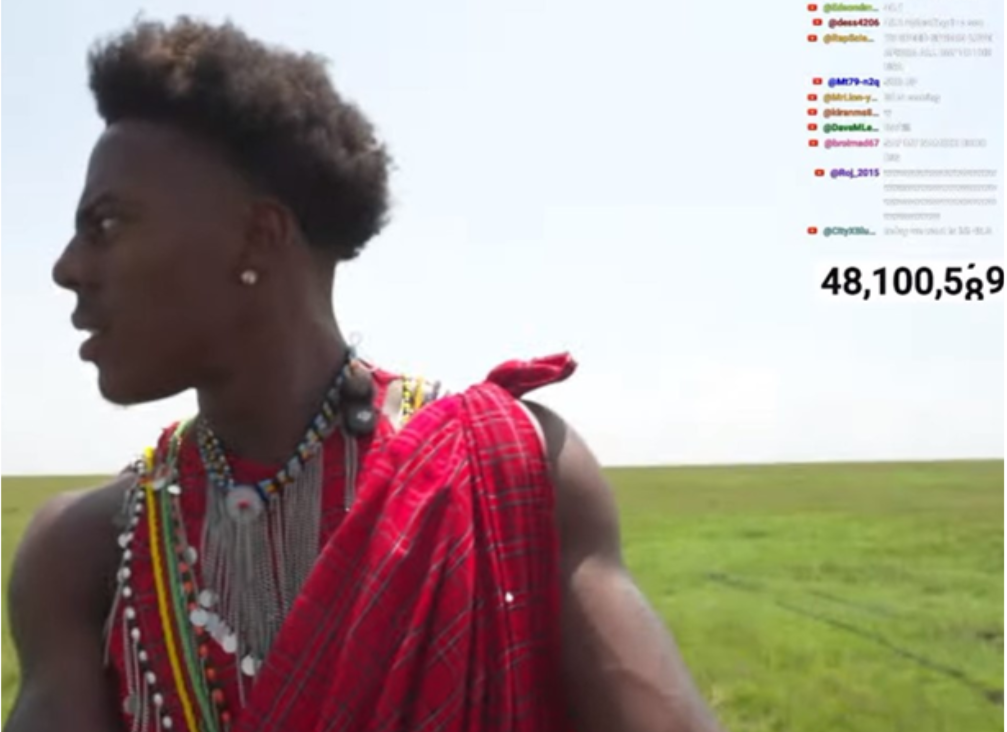
Figure 1: iShowSpeed in Massai Mara, Kenya. Source
For Kenya, structured collaboration with both local and international streamers offers a repeatable framework for promoting tourism, events, and cultural industries. By embedding creators within real environments rather than scripted and tight itineraries, streaming lowers audience scepticism while increasing emotional engagement and perceived accessibility. This positions adventure, spontaneity, and mobility as core components of national branding.
Risks, Gaps, and Opportunities Ahead
While Kenya benefited from partial government and tourism-board involvement, much of Speed’s movement remained reactive. Crowd control, mobility planning, brand alignment, and content access were improvised, creating safety risks and missed commercial opportunities. For instance, unplanned street surges during Nairobi livestreams required police intervention.
Local businesses benefited from exposure and but lacked mechanisms to capture data, convert traffic, or extend engagement beyond the moment. For example, a man who was able to sell an African print T-shirt to the streamer for 20,000 Kenya shillings. In cases like this, the absence of institutional coordination meant virality spiked briefly and then disappeared. Linking livestream exposure to official business directories, booking platforms, and post-event promotional campaigns would have allowed local enterprises to capture and sustain demand.
Finally, there is no standardised framework for local brands, creators, or constituencies to participate economically. Sponsorship integration remained informal with local creators being under-utilised, and tourism conversion was indirect. Rather than structured brand placements, affiliate partnerships, or coordinated creator campaigns, most commercial exposure occurred organically through spontaneous interactions on stream.
As the country looks to welcome another popular American YouTuber Mr Beast, the path forward is clear: Governments and tourism boards can help ensure this next visit by a streamer is a success through proactive participation ahead of time, aligning permits, locations, and messaging with content goals. Businesses can integrate directly into production and audience conversion pipelines and local creators can be collaborators rather than side characters, ensuring skills transfer, revenue sharing, and long-term ecosystem growth.
These gaps point to a broader opportunity for East African governments to formalise livestreaming through creator visas, safety protocols, and public-private partnerships that make digital content creation a viable economic pathway rather than a one-off viral event. If managed well, this could further dismantle stereotypes while positioning East Africa as capable, organised, and investment ready.
Conclusion
iShowSpeed’s visit to East Africa demonstrated how creator-led media can instantly reshape global perception, placing millions of viewers inside Kenyan streets and social spaces in real time. The streams challenged stereotypes and highlighted East Africa as youthful, digitally connected, and culturally relevant. However, the moment also revealed gaps in institutional coordination and monetisation, limiting how effectively attention translated into long-term economic value. With potential future visits from creators like MrBeast, there is a clear opportunity for governments, tourism bodies, businesses, and local live streamers to plan collaboratively, formalise partnerships, and convert viral visibility into sustainable cultural and commercial impact.
