

Africa's Artificial Intelligence Renaissance: How the Global AI Summit in Kigali is Reshaping the Continent's Digital Future
On April 3-4, 2025, the hills of Kigali bore witness to the inaugural Global Artificial Intelligence (AI) Summit, a historic moment that could fundamentally alter Africa's position in the global AI landscape.

Bridging the Gap: The Rise of Digital Lending Platforms in East Africa
Buy Now, Pay Later (BNPL) platforms have transformed global shopping, expenditure and credit access patterns. In East Africa, the impact of these platforms is most clearly illustrated by the purchasing power they have unlocked: from financing the purchase of modern-day essentials like airtime and smartphones to enabling the acquisition of solar panels and electric bikes.

Beyond the Shoreline: Building East Africa’s Blue Finance Ecosystem
East Africa’s extensive aquatic capital, from its Indian Ocean coastline to its Great Lakes, represents a monumental opportunity to drive climate-resilient growth and socioeconomic transformation. However, this potential is constrained by a significant financing gap.

Unpacking the Demographic Dividend: Unlocking East Africa’s Potential Through Healthcare and Education
East Africa stands at a pivotal moment in its development trajectory, with its youthful population presenting both a challenge and an unprecedented opportunity to unlock a demographic dividend.

Parched Lands, Polluted Waters: East Africa’s Urgent Water Crisis
East Africa’s escalating water crisis poses a significant threat to human well-being and regional development. Since the 1970’s, East Africa has faced recurring disasters such as floods and droughts which have worsened over time with the added impact of climate change.

The Cost of Corruption: Navigating Risk and Opportunity in East Africa’s Business Landscape
East Africa is rapidly emerging as one of the continent’s most promising economic frontiers. With a young and growing population, increasing urbanization, and regional integration efforts like the East African Community (EAC), the region is attracting attention from global investors seeking growth beyond saturated markets.

Digital Public Infrastructure in East Africa: Charting a Policy Pathway to Regional Transformation
East Africa is experiencing a major wave of digital transformation. This shift is driven by the need for stronger infrastructure, better public service delivery, and deeper cross-border integration. At the heart of this progress is Digital Public Infrastructure (DPI).

Ethiopia’s Path to Financial Inclusion: Leveraging Digital Banking
Ethiopia has long been an outlier in the region when it comes to financial inclusion. While neighbouring countries embraced mobile money and digital banking, Ethiopia kept to its more traditional route. Yet the last decade has seen the nation begin to reroute, slowly but surely, from exclusion to inclusion, from cash to digital, and from isolation to innovation.

Diseases and Defects: The Role of Genetics in Medicine
Genetics, a vital branch of biology, focuses on how traits and diseases are transmitted across generations. In the medical context, this field encompasses hereditary conditions and congenital anomalies that arise from specific gene mutations, chromosomal rearrangements, or complex interactions between genes and environmental factors.

Artificial Intelligence (AI) is redefining East Africa’s technological and educational landscapes, reshaping how young professionals prepare for and enter the workforce. This report explores AI’s transformative influence on the region’s tech sector, education systems, and career pathways showing how AI continues to impact and reshape the education sector and early job seekers across East Africa.
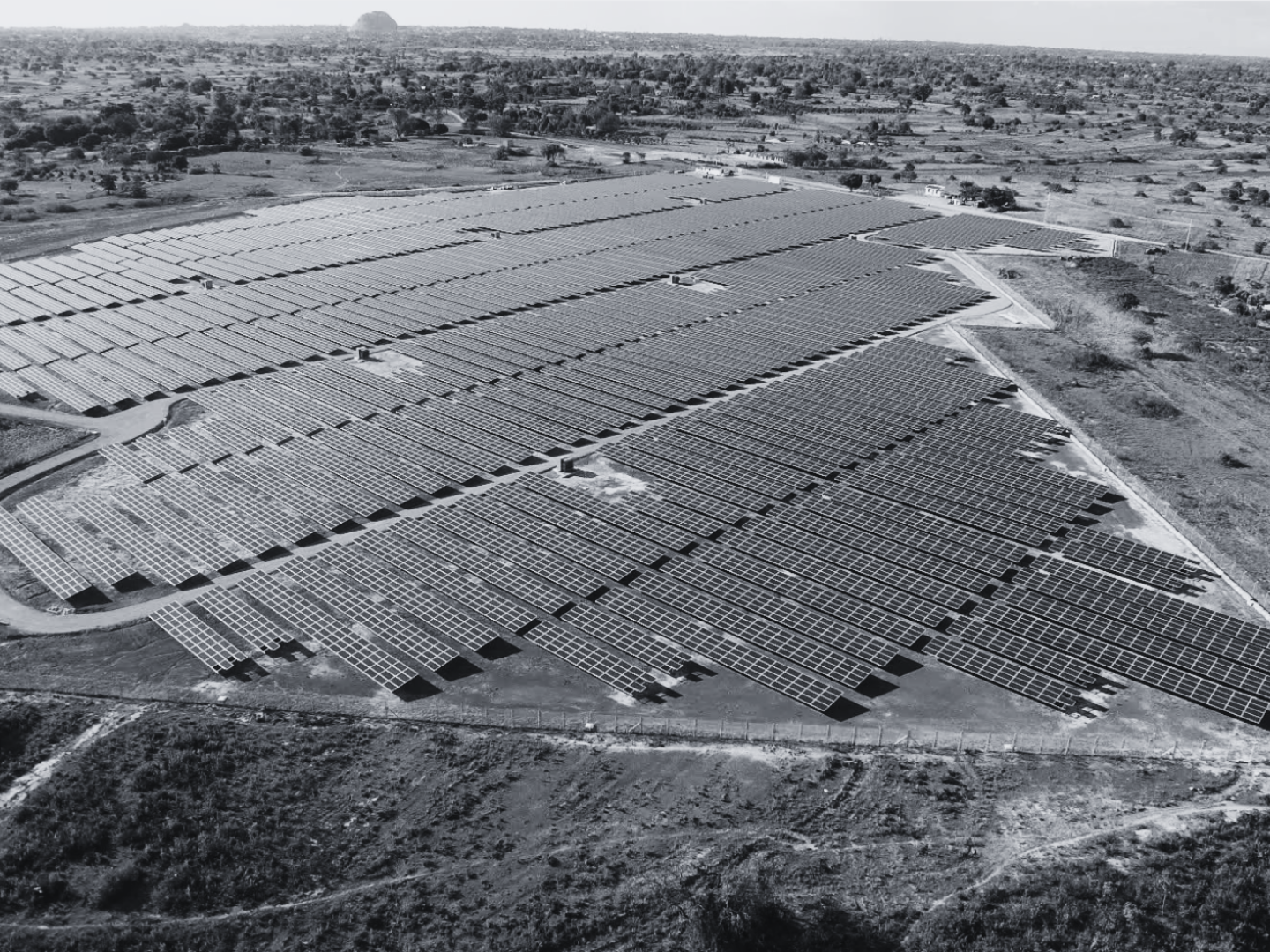
Eastern Africa is a region with vast untapped energy resources, including hydro geothermal, wind, and solar power, which could be harnessed to support economic growth and development. However, the region faces significant challenges in attracting investment, including political instability, weak governance frameworks, inadequate regulatory frameworks, and insufficient domestic financing.

East Africa’s DFS landscape is transitioning from a narrative of inclusion to one of complex integration. Once the global pioneer of mobile money, the region’s platforms have scaled massively; one major provider alone now processes an annualised transaction value approaching $200 billion.

East Africa stands at a critical linguistic crossroads, where the legacies of colonialism continue to shape communication, education, and identity. With over a hundred languages spoken across the region, the linguistic landscape reflects both immense diversity and enduring inequalities.

This report examines the evolution and current state of the consumer goods market in East Africa, focusing on how the structure, sourcing, and consumption of essential goods such as food, beverages, and clothing have transformed the region’s landscape. It aims to assess the factors and dynamics that have shaped the current consumer goods market in East Africa.
East Africa’s extensive aquatic capital, from its Indian Ocean coastline to its Great Lakes, represents a monumental opportunity to drive climate-resilient growth and socioeconomic transformation. However, this potential is constrained by a significant financing gap.
East Africa stands at a pivotal moment in its development trajectory, with its youthful population presenting both a challenge and an unprecedented opportunity to unlock a demographic dividend.
East Africa is experiencing a major wave of digital transformation. This shift is driven by the need for stronger infrastructure, better public service delivery, and deeper cross-border integration. At the heart of this progress is Digital Public Infrastructure (DPI).

Telehealth has the potential to revolutionise East Africa’s healthcare landscape, with critical gaps in access being bridged and quality of care improved. With the rising cost of illness, rapid population growth, and stark rural-urban healthcare disparities, digital health solutions offer scalable and cost-effective means to improve patient outcomes.

Private capital funds, or investment vehicles (IVs) – spanning private equity, venture capital, and private debt – play a pivotal role in the region’s economic growth and job creation, especially for micro, small and medium-sized enterprises (MSMEs). Yet, fund managers and investors often face questions about where best to domicile their vehicles for optimal regulatory compliance, tax efficiency, and investor confidence.

COVID-19, caused by the SARS-Cov-2 virus, emerged as a global pandemic, disrupting societies and economies worldwide. Five years later, East Africa continues to navigate the lasting effects of the crisis, particularly within its healthcare systems. This report evaluates the region’s response, assessing both immediate interventions and long-term transformations.

The Oxford English Dictionary defines ‘enjoyment’ as ‘the action or state of deriving gratification from an object.’ However, in East Africa, the term ‘enjoyment’ has been defined in popular discourse as more than just a state of being – it is a lifestyle, a philosophy, and, as this report explores, a serious economic force.

Nuclear fission, a process that was accidentally discovered to release energy in 1938, now drives nuclear power plants that account for 11% of the world’s electricity generation. Nuclear energy is recognised as a key towards carbon neutrality, endorsed by more than 20 countries and the agreed upon declaration to triple nuclear energy by 2050.

The middle class. Heralded as the engine of economic renewal and societal transformation, broadly defined, consists of individuals and households that fall between the lower and upper-income brackets, typically distinguished and delineated by their purchasing power, level of education and aspirational lifestyles. Whoever can uncover the hidden identity and patterns of the often overlooked middle class wields great power, as this segment is integral in generating profit and driving regional transformation.

With increasing global tension, the concept of supply chain sovereignty comes into question. It represents the aspiration of nations to have greater control over key components within their supply chains to mitigate risks associated with foreign dependence.

This report examines the current state and prospects of public and private capital markets in East Africa. It highlights the historical development of the markets in Kenya, Uganda, Rwanda and Tanzania, analyses their performance and identifies key trends hampering their continued growth.

This report is about the energy poverty hampering Uganda’s socioeconomic development. It explores the potential of mini-grids in Uganda, examining various aspects of mini-grids including the challenges and economic implications surrounding their development and contribution to rural electrification.

Over 90% of artificial intelligence (AI) research is from North America, Europe, and China, with less than 5% coming from Africa. As the world rapidly enters an era defined by an AI revolution, East Africa finds itself lagging significantly.

As startups grow in the region, their increasing prevalence suggests an upward trend for the foreseeable future. Therefore, their financing is increasingly becoming an important point of interest for both investors and entrepreneurs.

The increasing frequency of extreme weather events, unpredictable rainfall patterns, and rising temperatures are challenges that pose risks to food security and economic stability in the region. The region's vulnerability is best exemplified by Tanzania, where 80% of food production comes from small-scale farmers cultivating non-irrigated land.

Africa as a continent requires substantial investment in infrastructure projects to create real and sustained value as these ensure essential processes like industrialisation and urbanisation can be leveraged. However, one of the key questions underpinning this infrastructure challenge is how to finance these projects.